There’s a phrase that circulates through sermons, devotionals, and social media posts, one that seems to capture something true about how God works God doesn’t call the qualified, He qualifies the called. It isn’t a verse you’ll find printed in your Bible, but it echoes a pattern that shows up again and again in Scripture: ordinary, hesitant, even reluctant people being handed extraordinary assignments.
If you’ve ever felt like you’re not smart enough, brave enough, experienced enough, or holy enough for what God seems to be putting in front of you, this saying speaks directly to that fear. The idea behind God doesn’t call the qualified,
He qualifies the call isn’t that skill and preparation don’t matter it’s that feeling unready is not disqualifying. This article walks through what the phrase means, what the Bible actually says about it, and how to apply that truth honestly, without turning it into an empty promise.
Understanding the Message Behind This Christian Saying
What the Saying Means for Believers
At its core, God doesn’t call the qualified, He qualifies the call as a statement about sequence. It suggests that readiness often follows the call rather than preceding it. Many believers assume they need to have their life fully together with enough Bible knowledge, enough confidence, enough of a clean track record before God can use them. This saying pushes back on that assumption. It reframes calling as something God initiates and then equips, rather than something He only hands to the already-equipped.
This doesn’t mean skill is irrelevant. It means the starting point for obedience isn’t perfect competence; it’s willingness.
Why Feeling Unqualified Does Not End Your Calling
Feeling unqualified is common, and it isn’t a spiritual failure. Many people who eventually did significant things in ministry, in their families, in their communities started from a place of real self-doubt. The phrase God doesn’t call the qualified, He qualifies the called matters here because it separates feeling from fact. Feeling unprepared is an emotional and often accurate assessment of your current skill level. It is not, by itself, evidence that you were never meant to take the step in front of you.
The Difference Between Human Ability and God’s Power
Scripture consistently distinguishes between what a person can do on their own strength and what happens when God’s power works through human limitation. This is a recurring theme, not a one-off idea, and it’s the theological backbone behind God doesn’t call the qualified, He qualifies the called. Human ability is real and valuable, but it isn’t the mechanism the Bible points to when explaining how ordinary people accomplished extraordinary things.
What Scripture Teaches About God Calling Ordinary People
God’s Pattern of Using Unexpected People
Throughout the Old and New Testaments, the people chosen for major roles are rarely the obvious candidates. Shepherds, fishermen, a stuttering fugitive, a young man too inexperienced to be taken seriously these are the figures Scripture repeatedly lifts up. This pattern is one of the clearest biblical supports for the idea that God doesn’t call the qualified, He qualifies the called, even though the exact wording isn’t in the text itself.
Human Weakness and Divine Strength
Weakness in Scripture is often treated not as an obstacle to God’s work but as the very context in which His power becomes visible. This isn’t a justification for carelessness or lack of effort, it’s an observation about where God’s strength is most clearly demonstrated.
Why God’s Calling Begins With Faith
Faith, more than credentials, is presented in Scripture as the starting condition for calling. Abraham left home without a map. The disciples left their nets without a business plan. The calling came first; understanding and capability developed over time, through obedience.
Key Bible Verses About Calling, Purpose, and God’s Strength
1 Corinthians 1:26-29
Paul reminds the Corinthian church that not many of them were wise by human standards, powerful, or of noble birth when God called them. He explains that God deliberately chose what the world considers foolish and weak, so that human boasting would have no basis before Him. This passage directly supports the spirit of God doesn’t call the qualified, He qualifies the called God’s selection process doesn’t run on worldly credentials.
2 Corinthians 12:9
After Paul pleads for relief from a personal hardship, he receives an answer: God’s grace is sufficient, because His power is made perfect in weakness. Paul’s conclusion is striking: he chooses to boast in his weaknesses so that Christ’s power can rest on him. This is one of the clearest biblical illustrations behind the idea that qualification isn’t the prerequisite for use; weakness surrendered to God can become the very place strength shows up.
Ephesians 2:10
Paul tells believers they are God’s handiwork, created for good works that God prepared in advance. This verse speaks to purpose and design rather than qualification directly, but it reinforces that calling isn’t random; it’s part of a plan that existed before the person felt ready to walk into it.
Philippians 4:13
Often quoted in isolation, this verse where Paul says he can do all things through Christ who strengthens him is actually written in the context of contentment amid hardship, not achievement or ambition. Read in context, it supports the idea that capability for a task is sourced outside the person, in Christ’s strength, not in self-generated confidence.
Jeremiah 1:5-8
Before Jeremiah is even born, God says He knew and set him apart for a prophetic calling. Jeremiah’s immediate response is that he doesn’t know how to speak and is too young. God’s reply isn’t to affirm Jeremiah’s competence, it’s to tell him not to be afraid, because God will be with him. This exchange is a foundational text for the concept summarized as God doesn’t call the qualified, He qualifies the called.
Exodus 3-4
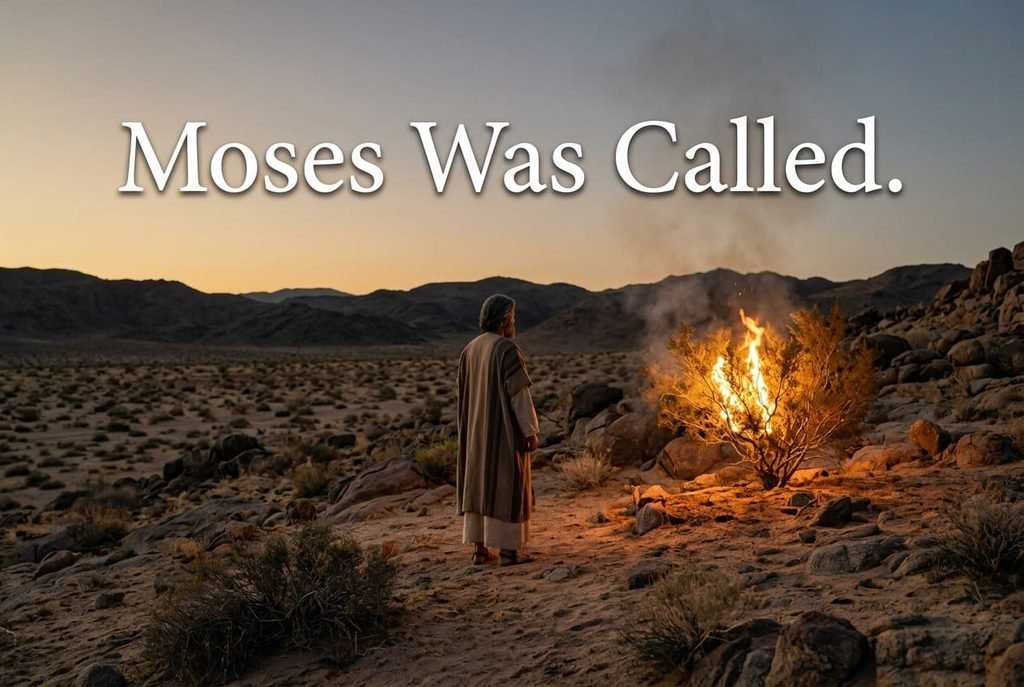
Moses offers a string of objections at the burning bush: he isn’t the right person, no one will believe him, he isn’t a skilled speaker. God doesn’t dispute the accuracy of Moses’ self-assessment. Instead, He promises His presence and provides Aaron as support. The narrative doesn’t resolve Moses’ inadequacy before sending him; it sends him anyway, with provision for the gaps.
Why God May Call Someone Who Feels Unqualified
God Sees Potential Beyond Present Limitations
A recurring biblical theme is that God’s view of a person isn’t limited to their current résumé. This is part of why God doesn’t call the qualified, He qualifies the call resonates with so many people it suggests that current limitation isn’t the full picture of what someone can become.
Your Current Skills Are Not the Whole Story
If you’re a parent who doesn’t feel equipped, a volunteer who feels out of their depth, or someone considering a career or ministry shift that feels beyond your training, it’s worth remembering that skill sets are not static. What you can’t do today isn’t necessarily what you’ll be unable to do in a year of faithful effort.
Also Read This 15 Powerful Lessons From 1 Corinthians 13:4-7 for Christian Love
Growth Can Happen After the Calling
This is a practical, not just theological, point: many skills relevant to a calling are best learned in the doing. Confidence in public speaking, wisdom in leadership, patience in caregiving these often develop through the experience itself, not before it.
Dependence on God Can Be More Important Than Confidence
Scripture doesn’t glorify self-assurance. It repeatedly favors humble dependence over confident self-sufficiency. Someone who steps forward while still leaning on God in prayer may be in a healthier posture than someone who feels entirely self-reliant.
Biblical People Who Felt Unprepared for Their Assignment

Moses and His Fear of Speaking
Moses’ initial limitation was a documented difficulty with speech and a lack of confidence in his own persuasiveness. God’s response wasn’t to instantly remove the speech difficulty it was to provide Aaron and His own promised presence. Moses grew into his role gradually, through decades of leadership under real pressure. The lesson for modern believers: a genuine limitation doesn’t have to be resolved before you begin; it can be accommodated as you go.
Gideon and His Feelings of Insignificance
Gideon described his clan as the weakest in Manasseh and himself as the least in his family. God’s response was reassurance of His presence, not a correction of Gideon’s self-assessment. Gideon’s growth into leadership happened through a series of tests he initiated himself, seeking confirmation before acting. The lesson: uncertainty and a desire for confirmation aren’t incompatible with genuine calling.
Jeremiah and His Concern About Being Too Young
Jeremiah’s objection was about age and inexperience in speech. God’s answer reframed the concern: Jeremiah wasn’t being asked to rely on his own eloquence but to speak what God gave him. The lesson: sometimes the perceived deficiency is real, but it isn’t actually the operative requirement for the task.
David and His Unexpected Role
When Samuel came to anoint a king from Jesse’s sons, David wasn’t even initially brought in from the field; he was the overlooked youngest son. His long-term development as a leader came after his anointing, through years of contrast between private faithfulness (tending sheep, facing Goliath) and public trial. The lesson: being overlooked by human expectation doesn’t mean being overlooked by divine intention.
Peter and His Growth as a Disciple
Peter’s early discipleship is marked by impulsiveness and failure, including his denial of Jesus. His transformation into a foundational leader of the early church happened progressively, after significant personal failure and restoration. The lesson: past failure is not automatically disqualifying for future responsibility.
Paul and His Transformed Purpose
Paul’s background as a persecutor of the church makes him one of the most dramatic examples of a completely redirected calling. His theological depth and missionary effectiveness developed over years, including a period of relative obscurity, before his most significant ministry. The lesson: a troubling past doesn’t automatically define a limited future.
How God Prepares People After Calling Them

Learning Through Scripture
Ongoing study of Scripture is one of the most consistent means by which biblical figures grew in wisdom and understanding relevant to their calling. Preparation isn’t only experiential; it’s also intellectual and spiritual formation through the text itself.
Developing Faith Through Experience
Faith described in Scripture often deepens through tested experience provision in the wilderness, deliverance in danger, growth through waiting. This kind of preparation can’t be rushed or substituted with information alone.
Receiving Wisdom Through Prayer
Prayer functions repeatedly in Scripture as the place where direction, courage, and clarity are sought and received, particularly in moments of uncertainty about a task or calling.
Growing Through Difficult Seasons
Hardship is a recurring context for growth throughout Scripture. This doesn’t mean every hardship is a training exercise assigned by God for a specific future task that would overstate what the Bible claims. It does mean that difficult seasons are frequently where character and dependence on God deepen.
Serving Before You Feel Completely Ready
Many effective leaders in Scripture began serving in smaller, less visible ways before larger responsibility came. Timothy assisted Paul before leading a church. Joshua served under Moses before leading Israel. Readiness for a bigger calling often shows up first in faithfulness to a smaller one.
How to Recognize a Genuine Calling
Compare the Calling With Scripture
A sense of calling should be evaluated against what Scripture teaches, not treated as self-validating. If a perceived calling would require violating a clear biblical principle, that’s a signal to reconsider the interpretation of the calling, not to override Scripture.
Pray for Wisdom and Direction
Consistent, honest prayer including prayer that invites correction is a foundational practice for discerning direction rather than projecting personal preference onto God.
Examine Your Motives
It’s worth asking honestly whether a perceived calling is rooted in a desire to serve and glorify God, or in ambition, recognition, or escape from a current circumstance. Motives are rarely perfectly pure, but examining them matters.
Seek Mature Christian Counsel
Input from spiritually mature people who know you well provides a check against self-deception. Scripture consistently values counsel over isolated decision-making.
Look for Opportunities to Serve
Calling often becomes clearer through actual engagement, volunteering, serving, stepping into small responsibilities rather than through abstract reflection alone.
Give Yourself Time to Discern
Rushing toward a major decision based on a single emotional moment is different from a calling that holds up over time, through prayer, counsel, and testing. Personal feelings alone are not sufficient evidence of a divine calling; feelings are a starting point for discernment, not the conclusion of it.
What to Do When You Feel Unqualified
Start With the Next Faithful Step
You don’t need the whole path illuminated. Scripture repeatedly shows people moving forward with only partial clarity, taking the next obedient step rather than waiting for the entire picture.
Identify What You Need to Learn
Naming specific gaps, a skill, a body of knowledge, an area of character turns vague inadequacy into an actionable plan for growth.
Ask God for Wisdom
James 1:5 promises that God gives wisdom generously to those who ask. This is a direct, practical resource for anyone feeling under-equipped for what’s ahead of them.
Accept Help From Others
Moses had Aaron. Paul had Barnabas and later Timothy. Accepting support isn’t a sign of insufficient calling; it’s often how calling is designed to function, within community rather than isolation.
Keep Growing Instead of Waiting for Perfection
Waiting for a sense of total readiness can become a permanent excuse for inaction. Growth is ongoing; it doesn’t have a finish line that must be crossed before service begins.
When Fear and Self-Doubt Become a Barrier
Recognizing Fear Without Letting It Lead
Fear is a normal response to a genuinely challenging assignment. The goal isn’t to eliminate fear entirely but to keep it from being the deciding voice in the decision.
Replacing Self-Doubt With Biblical Truth
Repeated, specific self-doubt can be met with specific scriptural truth not as a magic formula, but as a genuine counterweight to distorted thinking about your worth or capability.
Learning to Trust God During Uncertainty
Trust is built incrementally, often through small steps of obedience that are later validated, rather than through a single decisive moment of total confidence.
Remembering That Growth Takes Time
Patience with your own development matters. Comparing your current chapter to someone else’s long, matured ministry or life story sets an unfair and inaccurate standard.
What Does It Mean to Be Qualified in God’s Eyes?
Character Matters Alongside Ability
Scripture places significant weight on integrity, humility, and faithfulness qualities that are available to anyone willing to cultivate them, regardless of natural talent.
Faithfulness Matters More Than Appearance
The parable of the talents (Matthew 25:14-30) commends servants based on faithfulness with what they were given, not on the size of what they were given or how impressive it looked to others.
Spiritual Gifts and Personal Strengths
Romans 12 and 1 Corinthians 12 describe a variety of gifts distributed across the body of believers, none of which are earned through achievement they are given.
Humility and Willingness to Learn
A teachable posture is repeatedly valued over self-assured expertise throughout wisdom literature and the Gospels alike.
God’s Grace in Human Weakness
To be clear: this is a theological, not a practical, exemption. Being “qualified in God’s eyes” through grace does not mean that real-world responsibilities such as a medical role, a legal obligation, or a technical job no longer require actual training, licensing, or competence. Spiritual qualification and professional qualification are related but distinct categories.
Practical Ways to Follow God’s Purpose Today
Serve Where You Are
Purpose doesn’t always require a dramatic change of location or career. Often it starts with faithfulness in the responsibilities already in front of you.
Use Your Gifts to Help Others
Whatever ability you already have organizing, listening, teaching, encouraging, fixing things can be directed toward serving people around you starting now.
Strengthen Your Biblical Knowledge
Regular, structured engagement with Scripture builds the foundation from which discernment and confidence grow over time.
Build a Consistent Prayer Life
A sustained, honest prayer practice not just prayer in moments of crisis deepens the relationship out of which calling is best understood.
Stay Faithful in Small Responsibilities
Luke 16:10 notes that whoever is faithful in very little will be faithful in much. Small, unnoticed faithfulness is frequently the training ground for larger responsibility.
Learn From Wise Christian Mentors
Seek out people further along in faith and character who can offer honest feedback, encouragement, and correction as you grow into what you sense God is calling you toward.
Short Encouragement for Someone Who Feels Unqualified

You Can Begin Before You Feel Perfect
If you’re waiting to feel ready before you take the next step, you may be waiting for a feeling that was never the actual requirement.
Your Present Weakness Does Not Define Your Future
What you lack today in skill, confidence, or experience is a description of your current moment, not a permanent verdict on your capacity.
Keep Learning and Trusting God
Growth and trust work together; one doesn’t have to be complete before the other begins.
Let Scripture Guide Your Next Step
You don’t need every question answered to take the next obedient step. God doesn’t call the qualified, He qualifies the called and that process of being qualified often happens quietly, one act of faithfulness at a time, long after the calling first arrived.
Final Reflection on God’s Calling
There’s real comfort in recognizing that inadequacy isn’t the end of the story. The people Scripture highlights weren’t chosen because they had everything figured out they were chosen, and then shaped, often slowly and through real difficulty. God doesn’t call the qualified, He qualifies the call isn’t a promise that every uncomfortable assignment will end in visible success, and it isn’t license to skip genuine preparation where preparation is actually required.
It’s a reminder that the sense of “I’m not ready” is not, by itself, a reliable signal that you were never meant to take the step in front of you. Faithfulness in the next right thing prayed over, tested, and pursued with humility is often exactly where growth and calling meet.
Frequently Asked Questions
What does “God doesn’t call the qualified, He qualifies the called” mean?
It means readiness for a task from God often follows the call rather than preceding it. The saying isn’t a Bible verse but reflects a biblical pattern seen throughout Scripture, where God equips people after inviting them into a role, rather than only choosing people who are already prepared.
Is “God doesn’t call the qualified, He qualifies the called” a Bible verse?
No, it isn’t a direct quotation from Scripture. It’s a widely used Christian saying that summarizes a pattern found across many biblical narratives, including Moses, Gideon, and Paul, where God works through people who initially felt inadequate for their assignment.
Where does the idea that God qualifies the call come from?
It comes from observing recurring biblical accounts rather than one specific verse. Passages like 1 Corinthians 1:26-29 and Exodus 3-4 illustrate the concept clearly, even though the modern phrasing developed later as a devotional summary of these themes.
Can God use someone who feels unqualified?
Yes. Scripture repeatedly shows God working through people who openly express doubt about their own ability, including Moses and Jeremiah. Feeling unqualified is common and isn’t treated in Scripture as evidence that someone was never meant for the task ahead.
How can I know if God is calling me?
Discernment usually involves prayer, comparing the sense of calling with Scripture, seeking counsel from mature believers, and testing it through actual service over time rather than relying on a single feeling or moment of certainty alone.
What should I do if I feel afraid of my calling?
Acknowledge the fear honestly instead of suppressing it, bring it to God in prayer, and consider taking a small, faithful next step rather than waiting for fear to disappear completely before acting.
Does God expect me to be prepared before He calls me?
Not fully. Scripture suggests preparation is often ongoing and happens through the process of answering the call through prayer, learning, mentorship, and lived experience rather than being fully complete beforehand.

I’m Laiba Khan, a Christian blessings and inspirational content writer with 5 years of experience. I create heartfelt prayers, blessings, Bible verses, and uplifting messages to inspire faith, hope, peace, and encouragement in everyday life.